
Spaghetti with clams, the way we make them at home
Plain or with a few cherry tomatoes, purged clams and pasta finished in the pan: the Christmas Eve and summer Sunday dish, with no invented secrets.
2 min read Ischia
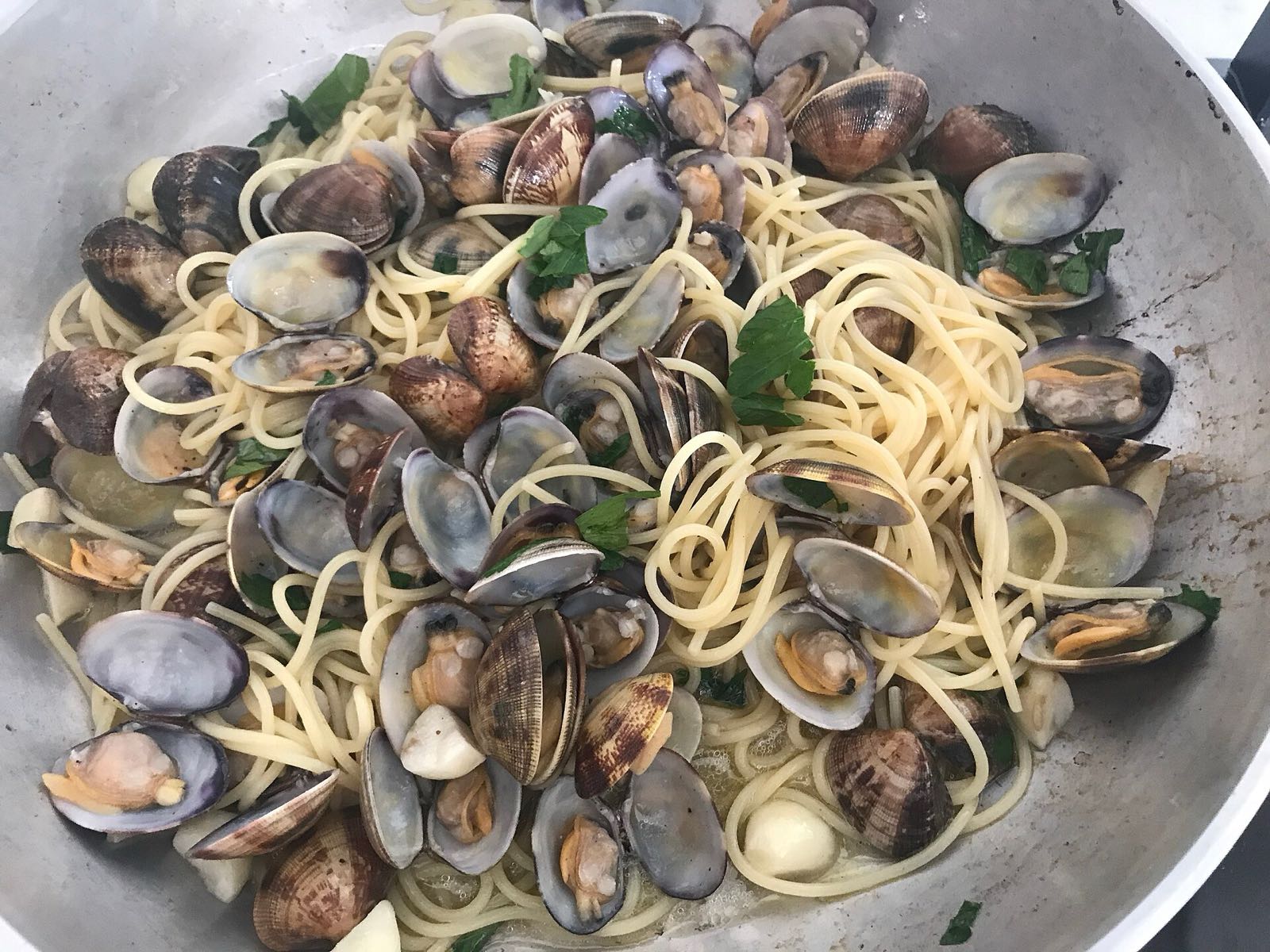
Here we don't really say "spaghetti alle vongole". We say spaghetti a vongole, or in the singular, as an everyday dish, 'o spaghetto a vongole. It is the first course on the table on Christmas Eve and the one we make on summer Sundays, back from the beach hungry and with salt on our skin. It looks very simple, yet it forgives nothing: few ingredients, nowhere to hide.
The clams
Everything depends on the clams. The best are veraci, carpet-shell clams with larger shells and two little siphons that poke out when they are alive; many people also use lupini, smaller and full of flavour. Either way they must be alive: throw away any with broken shells or open shells that don't close when tapped.
If they haven't been purged already, leave them a couple of hours in cold water with coarse salt so they release their sand, then rinse well. Skip this step and you'll find sand between your teeth, and at the table nobody will forgive you.
For four people, as a guideline:
- about one kilo of clams
- 350 to 400 grams of spaghetti, vermicelli or linguine
- extra virgin olive oil, generously
- one or two garlic cloves
- a bunch of parsley
- a splash of dry white wine, if you use it
- chilli or pepper, to taste
How to make them
Warm the oil with the garlic in a wide pan, adding chilli if you like. Add the clams, splash in a little wine if you wish, cover and wait for them to open, shaking the pan now and then. As soon as they open, take them off the heat: overcooked, they turn rubbery. Lift out the clams and strain the liquid they released, because that is where the whole flavour of the dish lies. Many also shell a few clams to spread the taste more evenly.
Meanwhile cook the spaghetti in salted water, but drain them well before they are al dente. Finish them in the pan with the clam liquid, stirring and adding a ladle of cooking water if needed. This is the risottatura: the starch from the pasta and the clam juices bind into a light cream that coats every strand. At the end, return the clams, add a drizzle of raw oil, chopped parsley and, for those who like it, a grind of pepper.
Plain or "sporcati"
The most classic version is in bianco, without tomato. But in many homes a few chopped cherry tomatoes go in, just for colour: the spaghetti are then sporcati, "dirtied". It isn't a betrayal, just another school. What almost everyone agrees on: no cheese, and no short pasta.
The vongole fujute
Then there is a version that always raises a smile: spaghetti with vongole fujute, "clams that ran away". It is spaghetti with garlic, oil, parsley and a few cherry tomatoes, with no clams, yet meant to recall their aroma. Eduardo De Filippo, the great Neapolitan playwright, made it famous, and it was the dish of days when the sea had given nothing. In our homes we still make it, when the clams are gone but the craving isn't.