
Ischian bruschetta: pane cafone, cherry tomatoes and oregano
Four ingredients and no secret beyond quality: how we make it at home, from toasted country bread to tomatoes that must taste of summer.
2 min read Ischia
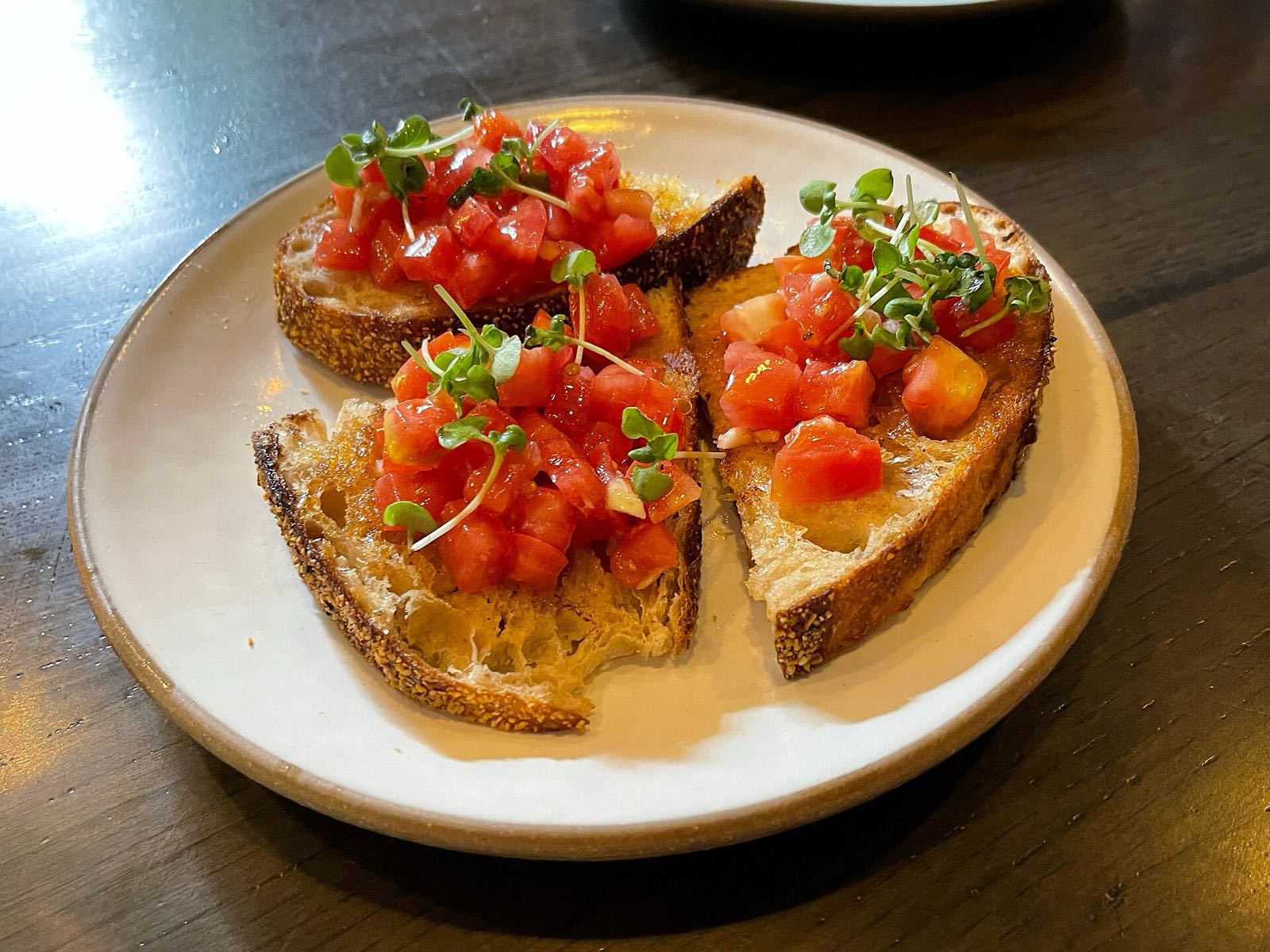
Some dishes don't need a restaurant. Bruschetta, for us, is one of those things you make at home, in the countryside, on the terrace after the beach, when hunger arrives before dinner. It isn't a recipe kept in a notebook: it is a gesture. Bread, tomato, oil, garlic, oregano. If one of them is missing or poor, the bruschetta fails, and no trick will save it.
Pane cafone
Everything starts with the bread. The right one is pane cafone, the country loaf of the Neapolitan tradition: a thick, dark, crunchy crust and a soft, open crumb full of holes. The name comes from cafoni, as Campania's farmers were once called, because it was their everyday bread. It is made with rustic flours and a long rise, and it keeps well into the next day. In fact, yesterday's bread is perfect for bruschetta, because it toasts better and doesn't go soggy straight away.
Cut the slices thick, at least a finger's width. Toast them over embers, on a grill or in a pan, until the surface is golden and crisp but the inside stays soft.
The cherry tomato
The second star is the cherry tomato. In summer, on the island, people use the ones from the vegetable garden: small, sweet, tasting of sunshine. There is only one rule: if the tomato tastes of nothing, the bruschetta will taste of nothing. Make it in season, from June to September, when the tomatoes are at their best.
For four people, roughly:
- four to eight slices of pane cafone
- a good bowl of ripe cherry tomatoes
- one or two garlic cloves
- extra virgin olive oil, generously
- dried oregano, salt
- a few basil leaves, if you like
How to make it
Cut the tomatoes into pieces, put them in a bowl with a pinch of salt and let them rest for a few minutes. They release their water, and if you prefer it less wet you can drain it. Then dress them with oil, oregano and, if you like, basil torn by hand, and let them sit while you toast the bread.
As soon as the bread is ready, still hot, rub the garlic clove over the surface: the rough crust works like a grater and the garlic melts into the bread. How much to rub is up to you, but don't overdo it. Then spoon on the tomatoes with their juices, add another drizzle of oil and bring it to the table.
Some eat it straight away, crunchy; others wait a few minutes so the bread softens and soaks up the dressing. Two schools of thought, and here they live peacefully in the same family.
When to eat it
Bruschetta is the starter of country dinners, barbecues and evenings in the wine cellar with friends. It goes with a glass of chilled white wine and often a few slices of salami or cheese. In restaurants you will almost always find it among the antipasti: order it when you see bright red tomatoes around, and ask for toasted pane cafone. If it arrives warm, smelling of garlic, with oil running off the edges, you are in the right place.