
Polpo alla luciana, octopus Santa Lucia style
A covered pot, a low flame and octopus cooking in its own water with tomato and olives: the dish that teaches patience.
2 min read Ischia
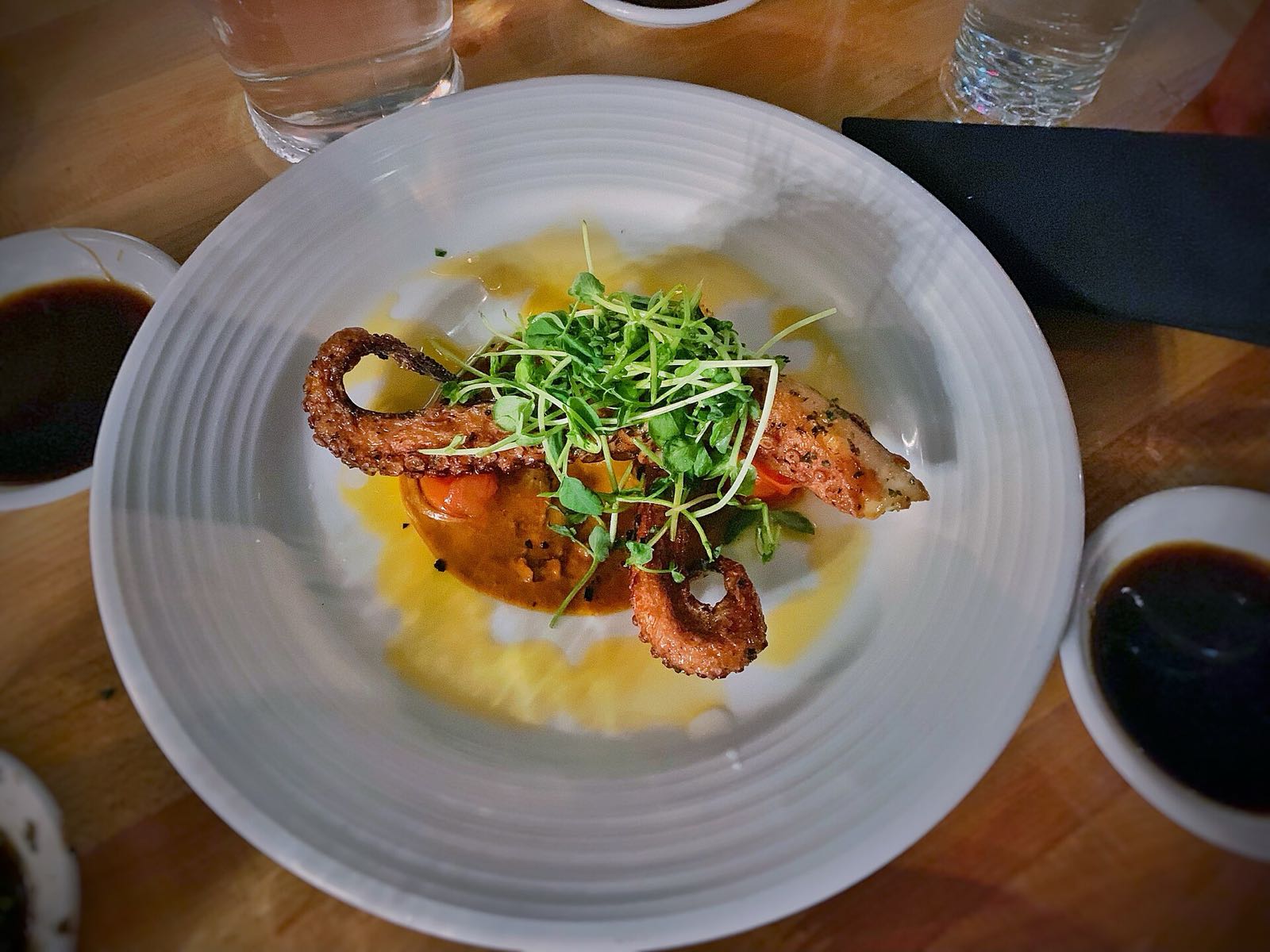
Polpo alla luciana is one of those dishes that teach patience. A few ingredients, a covered pot, a low flame and all the time it needs. The result is tender octopus in a thick red sauce that tastes of the sea, perfect for mopping up with bread. Here it is home cooking, made whenever a fine rock octopus comes in from the sea.
The name comes from Santa Lucia
Alla luciana means in the style of the luciani, the people of the Santa Lucia district of Naples, at the foot of Pizzofalcone. For centuries it was a neighbourhood of fishermen and sailors, and tradition has it that the dish was born there. There is no inventor and no date: there is a way of cooking octopus that spread from the gulf to every seafood kitchen in Campania, the islands included.
Its own water
There is a saying every Neapolitan knows: 'o purpo s'adda cocere cu ll'acqua soja, the octopus must cook in its own water. It is the golden rule of this dish. As it cooks, octopus releases a lot of liquid, and if the pot is tightly covered and the flame is low there is no need to add anything. Those who add water for fear it will stick usually end up with boiled octopus and a washed-out sauce.
Ingredients and method
For an octopus of about one kilo, roughly:
- extra virgin olive oil and two cloves of garlic;
- peeled tomatoes or cherry tomatoes, enough for a sauce that is not too abundant;
- a handful of black Gaeta olives;
- a spoonful of capers, if you like them;
- chilli and parsley.
Clean and rinse the octopus. In a pot, ideally earthenware (the pignata), warm the oil and garlic, then add the tomatoes, olives, capers and a little chilli. Put in the whole octopus, cover well and leave it over a low flame. Some people used to seal the lid with a rope of flour-and-water dough so no steam could escape; today a heavy, tight-fitting lid is enough.
The time depends on size: from forty minutes to an hour or more. The test is to push a fork into the thickest part of a tentacle: it should go in without resistance. When it is done, turn off the heat and let the octopus rest in its sauce, covered, a little longer. Fresh parsley, and it goes to the table.
How we eat it
Polpo alla luciana is served in pieces with all its sauce, alongside rustic bread or freselle (ring-shaped twice-baked bread) to soften in the sauce. Some use the same sauce for spaghetti or linguine, and some cook moscardini, the smaller baby octopus, the same way, in less time.
A tip from the fishmonger: ask whether the octopus has already been tenderised or frozen, because either way it will be more tender. And go easy on the salt: between the olives, the capers and the octopus's own taste of the sea, it often needs very little. Taste the sauce at the end and adjust only then.