
Holiday sweets on the island, from Christmas to Easter
Struffoli and roccocò at Christmas, migliaccio with spaghettini at Carnival, zeppole for Saint Joseph, pastiera at Easter: the sweet calendar of an Ischia home.
2 min read Ischia
Here you can tell the holidays are coming from the scent drifting out of kitchens before you see it on the calendar. Warm honey, cinnamon, orange, orange blossom: every season has its sweet, and families on Ischia follow the same rhythm as the Neapolitan tradition, with a few variations all their own.
Christmas: the guantiera
In December every home brings out the guantiera, the tray of sweets that stays on the table and is offered to anyone dropping by with seasonal greetings. Preparations start as early as the Immaculate Conception, on 8 December, and almost everything on this list ends up on it:
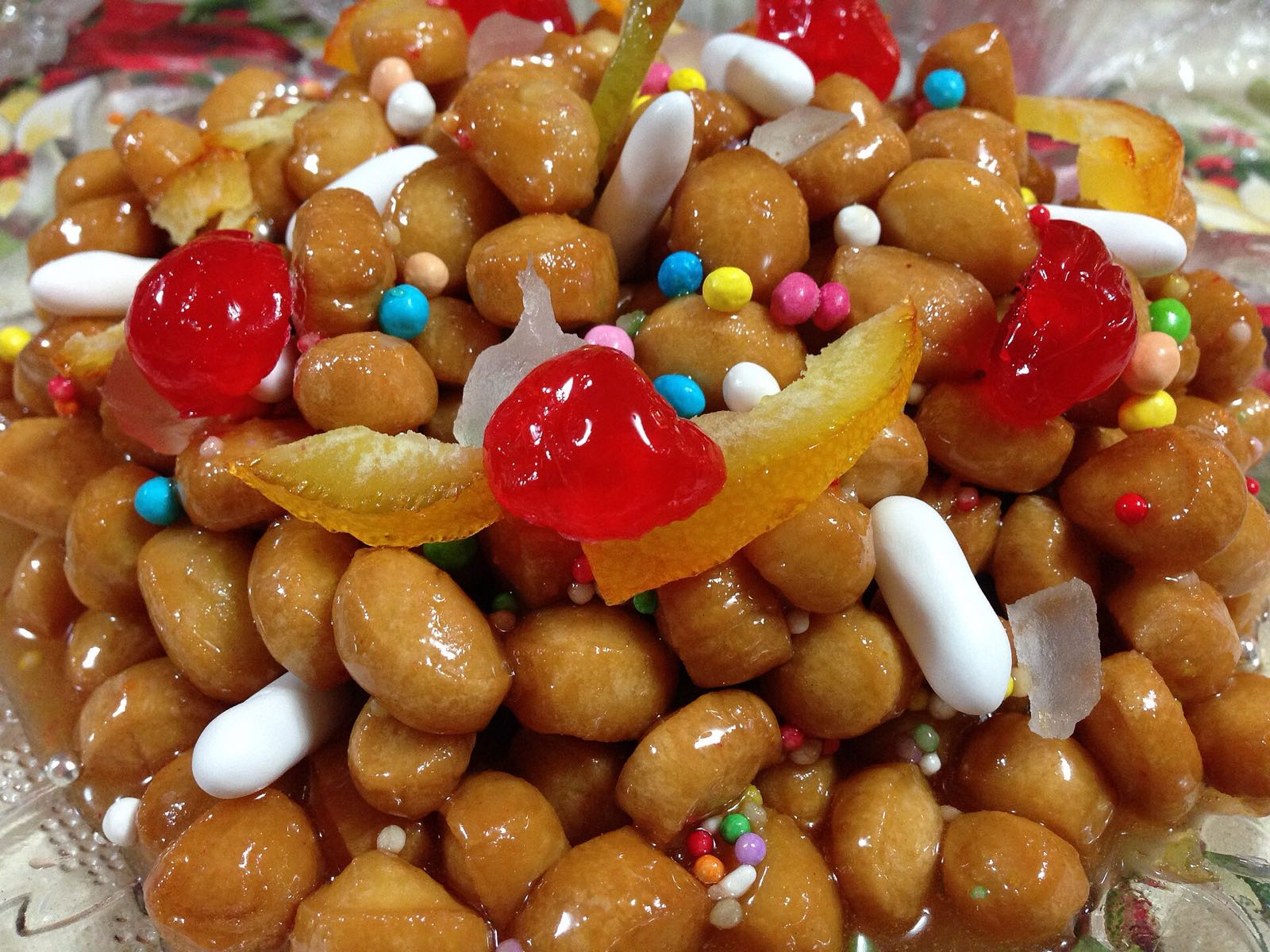
- struffoli: little balls of fried dough coated in warm honey and decorated with candied fruit and coloured sprinkles. They are made in large batches, because they are also given to relatives;
- roccocò: hard rings with almonds, orange peel and pisto, the spice mix of Neapolitan Christmas sweets, which includes cinnamon, cloves and nutmeg. They are so hard that people dip them in a fortified wine;
- mostaccioli: diamond-shaped biscuits with honey and pisto, covered in chocolate;
- susamielli: S-shaped biscuits with honey, almonds and spices;
- Christmas zeppole: rings of leavened dough, often with potato in the mix, fried and rolled in sugar or honey.
Advice from home: do not eat them all on the first day. Roccocò and mostaccioli last for weeks, and actually improve.
Carnival: Ischia's migliaccio
Migliaccio is a Carnival cake found throughout Campania. Elsewhere it is made with semolina; here there is a particular version, migliaccio ischitano, made with thin spaghettini instead of semolina, together with eggs, sugar, lemon zest and cinnamon. The name recalls the millet flour of the original recipe.
It is a homely cake, cut into squares and eaten as a snack or for breakfast. Around Carnival you will find it in some of the island's pastry shops, and a few restaurants list it among their desserts.
Saint Joseph: zeppole
On 19 March, Saint Joseph's Day and Italian Father's Day, shop windows fill with zeppole: a ring of choux pastry, fried or baked, filled with pastry cream and finished with syrupy sour cherries and icing sugar. Every year we argue about whether the fried or the baked one is better; the answer, usually, is to have one of each.
Easter: pastiera
The sweet that closes the circle is pastiera, the symbol of Easter in Campania. A shortcrust shell, a filling of cooked wheat, ricotta, eggs, sugar, candied peel and orange blossom water, and the classic lattice of pastry strips on top.
Traditionally it is made on Holy Thursday and left to rest until Sunday, so the aromas can blend. Every family has its own dose of orange blossom and its own opinion on candied peel, and one's mother's pastiera is always, of course, the best.
How to taste them as a guest
If you spend the holidays on the island, walk into a pastry shop and ask what is in season: they will point you to what is being made at that time of year. And if a family offers you a slice of pastiera or a handful of struffoli, accept. Saying no is simply not done here.