
The 'Ndrezzata of Buonopane
Crossing staves, tambourines, an ancient chant: the dance Buonopane has performed for centuries, on Easter Monday and for the feast of St John.
2 min read Barano d'Ischia
If there is one sound everyone in Barano recognises, it is the sharp crack of wooden staves meeting in time. That is the 'Ndrezzata, the dance of Buonopane, and anyone who has seen it up close never forgets it.
What the 'Ndrezzata is
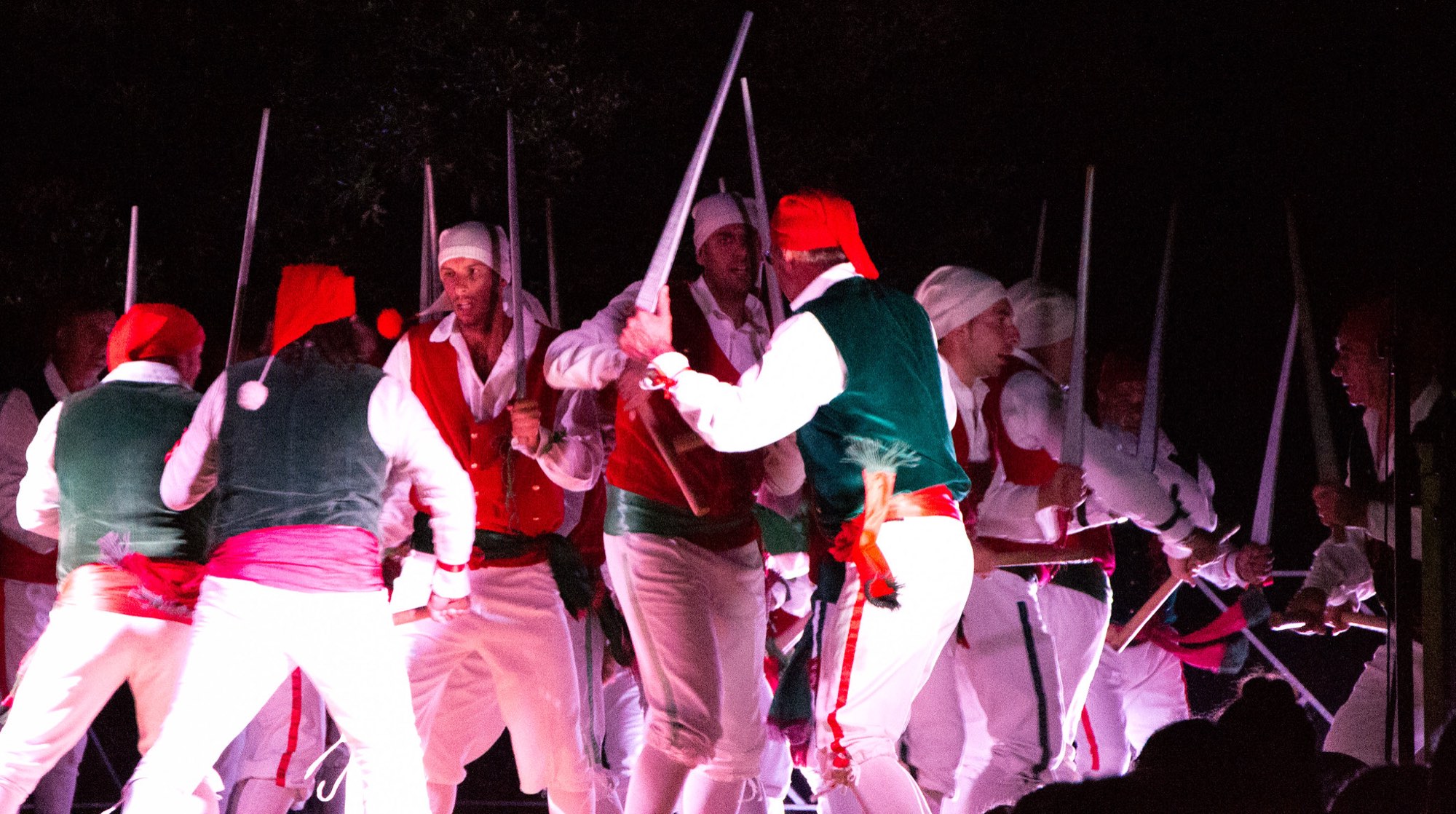
The name comes from dialect: 'ndrezzata means interwoven. And that is exactly what happens in the square: the dancers, split into two groups, move in a circle and weave between each other, striking wooden staves and short swords together while reciting a ritual chant aloud. It looks like a fight, and in a sense it is, but a fight choreographed down to the last step.
The rhythm comes from tambourines and flutes. At first the step is slower, almost measured; then, as the "battle" goes on, it speeds up and grows more and more energetic, until the whole square is holding its breath.
Where it comes from
We tell different stories about its origin, and none is certain. Some say the Greeks brought it, as an imitation of the duels used to train young soldiers. Others link it to the islanders' struggles against Saracen raiders landing from the sea.
The version Buonopane likes to tell best comes from a sixteenth-century manuscript: a man from Barano and a man from Buonopane in love with the same woman, a quarrel that dragged both villages in, and violence that grew until the bishop had to step in to restore peace. That peace, they say, was made in Buonopane on Easter Monday. Ever since, the dance has recalled both things: the clash and the reconciliation.
Who dances it and what they wear
The 'Ndrezzata is danced by eighteen people in two ranks. The costumes recall those of seventeenth-century Ischian fishermen: knee-length breeches, shirt, waistcoat and a long cap with a pompom, in the colours of the Italian flag.
The loveliest part is how it is learned. There is no school: fathers teach the steps to their sons, generation after generation. That is why, in Buonopane, the dance is not a show for tourists but a family matter, and being part of the group is a source of pride.
When to see it
There are two fixed dates:
- Easter Monday, which we call lunedì in Albis, the day when, by tradition, peace was made;
- 24 June, the feast of St John the Baptist, patron saint of Buonopane.
On these occasions the dance is performed in the village, in Buonopane. You may also catch it at other times of year, during events and festivals, but those dates vary, so ask locally at the Pro Loco tourist office or the Barano town hall.
A tip from the islanders
Arrive early and stand to the side, not in front: the staves spin fast and the dancers need room. Do not interrupt with flashes, listen to the chant, watch the feet more than the hands. And at the end, when the circle breaks up and everyone embraces, you will understand why, for centuries, this dance has spoken more of peace than of war.