
The farmers' paths: dry-stone walls, rock cellars and stone houses
Above the beaches lies another Ischia: mule tracks, dry-stone walls, houses carved into green tuff and wine presses in the woods. A walk through the island's farming memory.
2 min read Forio
Those who know Ischia only from the sea cannot imagine what lies above. Leave the tarmac and take one of the old mule tracks climbing towards Epomeo, and you enter another island: the island of farmers, dry-stone walls and houses carved into the rock. It is an Ischia you cannot see from the beaches, and for us it is the truest one.
The green stone of Epomeo
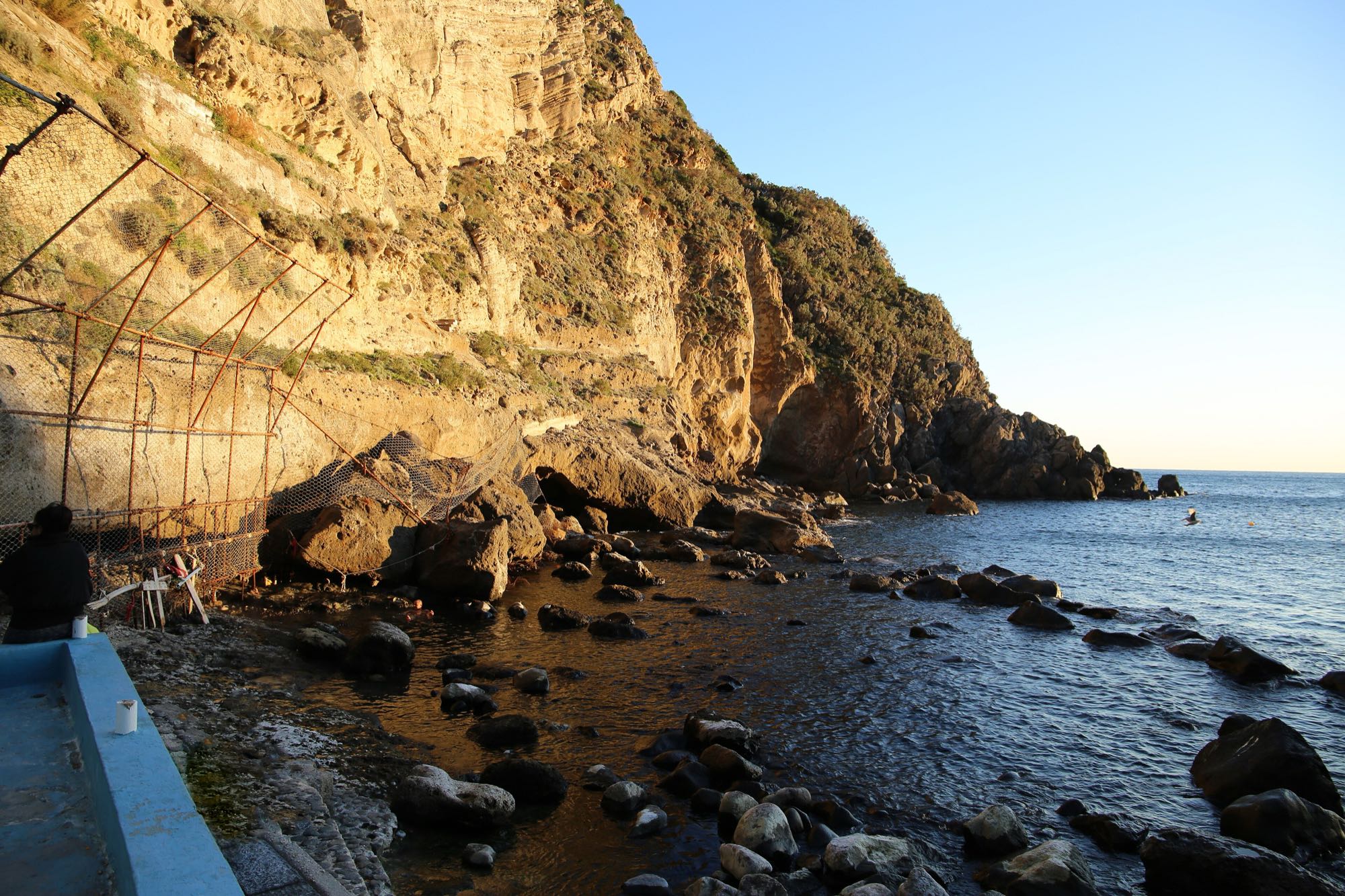
It all starts with green tuff, the rock of our mountain. Over the centuries huge boulders broke away from the flanks of Epomeo and rolled downhill. Islanders did not move them: they moved in. By hollowing out the blocks they created rooms, beds and storerooms. These are the case di pietra, the stone houses, scattered above all around the Falanga area above Forio.
Local sources say these slopes were already inhabited in the fifteenth century, when many families left the coast to escape pirate raids and began growing vines on the mountainside. When that back-breaking work was abandoned, the woods took everything back, and today the houses peep out among chestnuts and holm oaks.
Parracine and cellai
Along the paths you are accompanied by parracine, the green-tuff dry-stone walls that hold up the terraces. They are built without mortar, stone upon stone, and still support vineyards and vegetable plots in places where farming seems impossible.
Inside the boulders open the cellai, where wine was kept cool. Next to them are the palmenti: two basins carved into the rock, a larger one where grapes were trodden and a smaller one where the must flowed. The Falanga woods hold many of them, witnesses of a time when wine was made right up on the mountain.
The snow pits
One of the most surprising details is the fosse della neve, the snow pits: wide, deep hollows in the ground where snow and hail were gathered in winter and covered with leaves to keep them until summer. It was our grandparents' refrigerator, used to keep food fresh in the hot months.
The walk from Frassitelli to the Falanga
The best-loved route starts from the Frassitelli viewpoint, which looks over the whole of Forio, from Punta Imperatore to the bay of San Francesco. From there you descend among vineyards clinging to the slope, chestnut groves and meadows, with stone houses emerging between the trees. If you have the legs for it, carry on towards the summit of Epomeo, where the Hermitage of San Nicola is carved entirely out of tuff.
Tips for walking like an islander
- Hiking boots, water and something to eat: there are no bars on the mountain.
- Some stretches are poorly signposted: the first time, it is worth going with a local guide.
- Many stone houses and plots are private property. Look, take photos, but do not go in without permission.
- Avoid the hottest hours in summer; spring and autumn are the best seasons.
And if you meet a farmer at work, say hello. Often he will be the one to tell you who lived in that house in the boulder, and why.