
The high villages: Pizzi Bianchi, Serrara, Fontana and the stone houses
Above the sea lies another Ischia, of viewpoints, woods and houses carved into green tuff. A tour of the hill villages of Serrara Fontana, at a mountain pace.
3 min read Serrara Fontana & Sant'Angelo
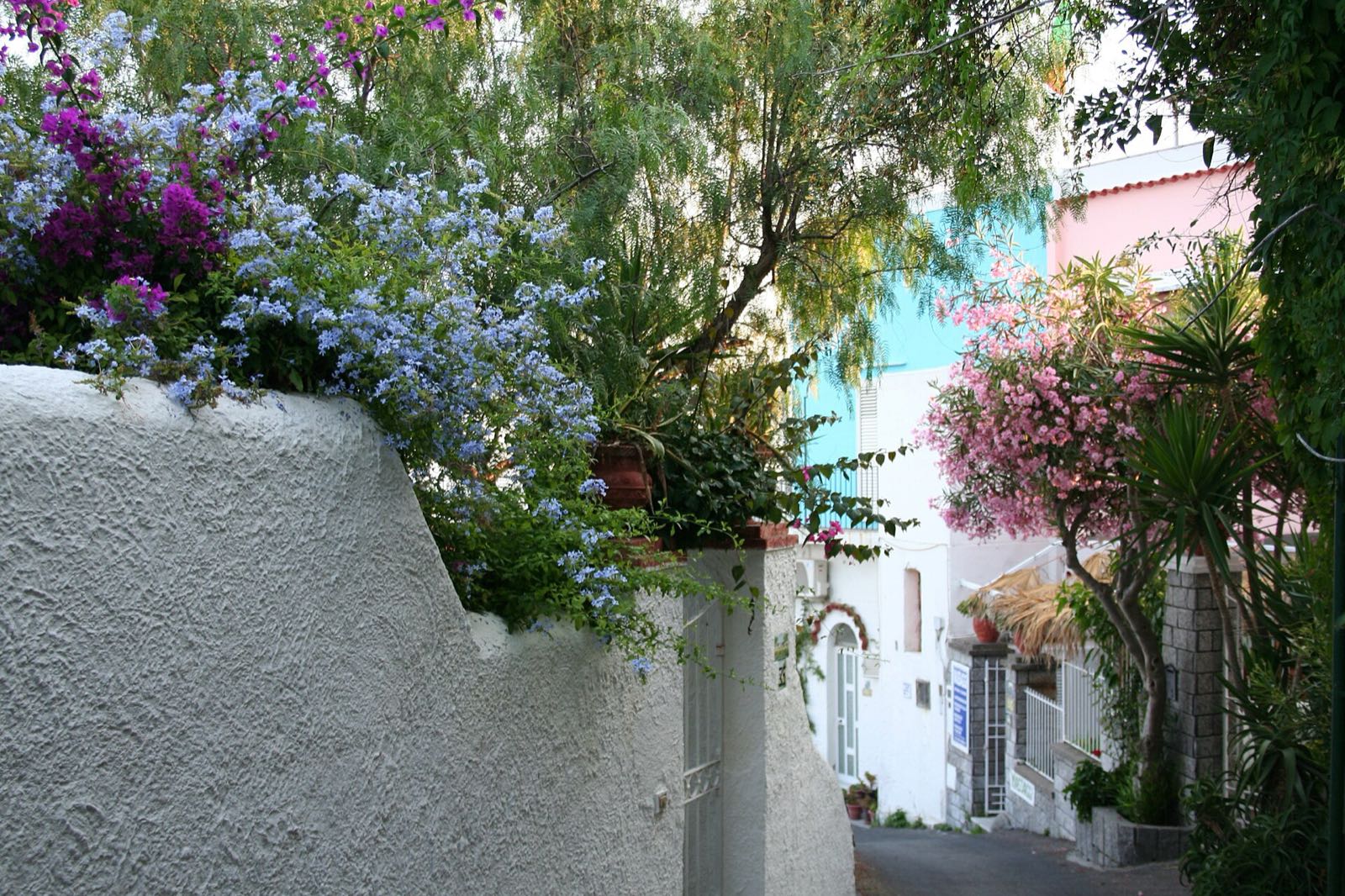
Most visitors see Ischia from the sea. We suggest looking at it from above. Over Sant'Angelo and the Maronti beach, on the slopes of Mount Epomeo, there is a farming, mountain Ischia of vineyards, chestnut woods, quiet little squares and a very particular stone: tufo verde, the green tuff that forms the island's backbone.
Serrara Fontana, the highest municipality
Serrara Fontana is the island's highest municipality and also its smallest. It was born from the union of two villages, Serrara and Fontana, and its territory runs from the mountain down to the sea, with hamlets such as Ciglio, Noia, Succhivo and Sant'Angelo. That's right: the most famous fishing village on the south coast belongs to a mountain municipality.
In Serrara, stop at the belvedere. From up there you can see Sant'Angelo and its rock, the open sea and, on the clearest days, all the way to the island of Ventotene. It is one of Ischia's finest balconies, and in the evening the light is worth the climb.
Fontana, the gateway to Epomeo
Fontana is where the classic ascent of Mount Epomeo begins. The little square is the meeting point for walkers, and the view here opens the other way, towards the Gulf of Naples, Procida and Vivara. Early morning is the best time: cool air, shops opening, the village getting ready for the day.
The path to the summit is considered easy and takes about an hour on foot. Along the way you pass the Pietra dell'Acqua, a huge boulder that people adapted into a cistern.
The Pizzi Bianchi
Between Serrara and Fontana, around Noia, opens a landscape that looks like another continent: the Pizzi Bianchi, spires of white tuff rising from the ground like the pinnacles of a cathedral. Wind and rain carved them, eroding the volcanic rock over thousands of years. Some compare them to the fairy chimneys of Cappadocia, and a few locals still call them i Pizzi di Don Andrea.
An honest warning from those who live here: the trail that runs down through the Pizzi Bianchi to the Roman baths of Cavascura and Sant'Angelo is for experienced hikers. The ground is crumbly and slippery, and some stretches are not always maintained. Go with a certified hiking guide and proper trekking boots, never alone and never in flip-flops.
The stone houses in green tuff
Then there are the case di pietra, the stone houses, the place closest to our hearts. In the Falanga wood, on the slopes of Epomeo, the huge boulders of green tuff that tumbled down the mountain were hollowed out by people and turned into homes, storerooms and cellars: a whole rock-cut village.
Inside you can still see:
- beds carved into the stone;
- palmenti, basins cut into the rock where grapes were trodden, because where chestnut trees grow today there were once vineyards;
- fosse della neve, snow pits where winter snow was packed down to provide ice in summer.
You reach them on foot along woodland paths. Here too, if you don't know the area, it's best to go with someone: the signposting isn't always clear.
How to enjoy them
Go up in the cooler hours, bring water and a jacket even in summer, because the wind changes at altitude. Stop in the little squares, step into the small grocery shops, say hello to the people sitting outside their homes. The high villages are never in a hurry: those who live here measure time by the seasons of the vineyard and the woods. For a few hours, try doing the same.